Father Aleksander Toom (1887-1961)
A Priest Behaving Badly
Both schoolteachers and clergy are generally held in high esteem. However, there are exceptions who tarnish the reputation of both professions: one such person was Father Aleksander Toom (Toompuu).
Toom was born in 1887 on either the island of Saaremaa or the isle of Muhu. After completing summer pedagogy courses, he began working as a teacher at the Pähkla primary school in 1906, where he remained until 1908. From 1910, he was a sacristan-schoolteacher at the Orthodox parish school in Valdemārpils (Ventpils district) in what is today Latvia [1]. He probably married a Latvian woman around this time [2]. In 1912, Toom began working as an assistant teacher at the Mustjala school on Saaremaa; a year later he was appointed sacristan-schoolteacher at the Ööriku parish school [3]. He left his position in 1918 due to the German invasion [4].
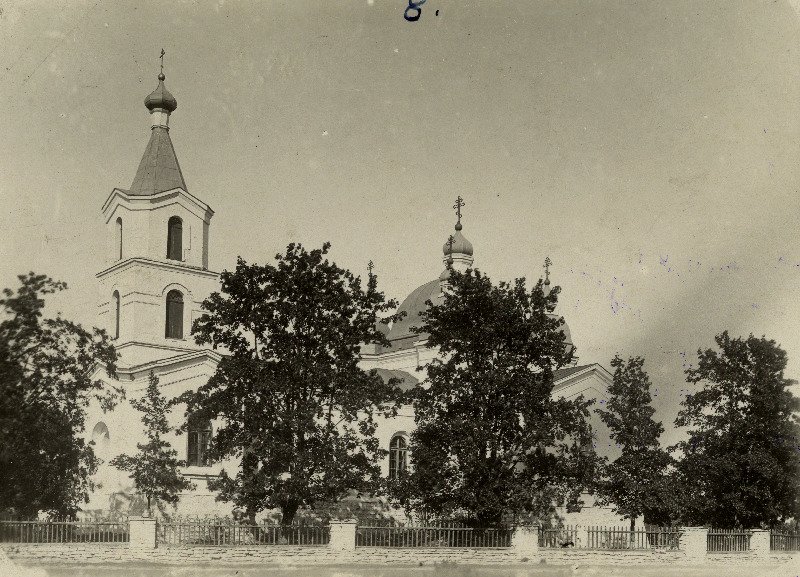
Ööriku church of the Trinity, Saaremaa, 1925 (EFA.554.0.185756)
The first scandalous incident involving Toom took place in Ööriku. In 1916, during the Christmas holidays, he threatened a villager, saying, ‘Tonight you will see how I beat you up and take your girl away from you.’ He then threw his coat to the floor and grabbed the girl by force. However, she managed to break free and run out of the room. Toom chased after her and returned a short time later, boasting that he had ‘done the girl’ [5]. A year later, Toom wanted to shoot a man with a rifle, but the intended victim wounded Toom in the head while defending himself [6]. In the spring of 1918, stolen clothes and underwear were found in Toom’s apartment [7]. When Toom was still a teacher in Ööriku, he ordered the schoolchildren into the yard one day, told them to line up, and promised to show them a rainbow:
Then he took out his “thing” in front of the children and started “peeing” [in an arc], saying: “This is what a rainbow looks like” – of course, Toom was very drunk [8].
In January 1919, Toom returned to work at the Pähkla school [9]. Two years later, parents submitted a statement to the Saare school board:
We, the undersigned parents of children attending the Pähkla primary school, hereby declare to the school board that we are dissatisfied with our schoolteacher Aleksander Toom and do not wish him to continue for the coming school year for the following reasons:
1) Toom is a drinker and gets drunk to the point of stupidity; then he goes around writing some kind of reports; he claims to be a secret police officer and demands people’s identity cards;
2) He wastes his time at school: the children go to school, but only there are they told that there is no school, as the teacher has to go to town to take care of some business;
3) Toom is a hunter and keeps a hunting dog in the school building, which has eaten the children’s lunch bags several times; the municipality also suffers material damage because the dog breaks school windows [10].
The local police investigated Toom at the request of the Saare county administration in 1921-22. He emphasised:
... the complaint against me is motivated by a desire to discredit me and take personal revenge. I have never been absent from school without a valid reason. I went to the market in town to buy food, and if I happened to be late for class, I always made up for it. ... I am a consumer of alcoholic beverages, but I have never drunk to the point of stupidity, nor have I allowed myself to do so at school [11].
Toom also denied the accusation that he had asked people for their identification cards while pretending to be a secret police officer and disagreed with the claim that his dog had broken windows, although he admitted that it may have sometimes taken food from bags left on the floor [12]. The police ultimately admitted that ‘further investigation of the matter is impossible, as the people in the area clearly do not wish to get involved and claim to have no knowledge of the matter’ [13]. Nevertheless, enough evidence was gathered against Toom for the county school board to reprimand him in November 1921 [14]. Toom pledged abstinence and promised to resign if he broke his word [15].
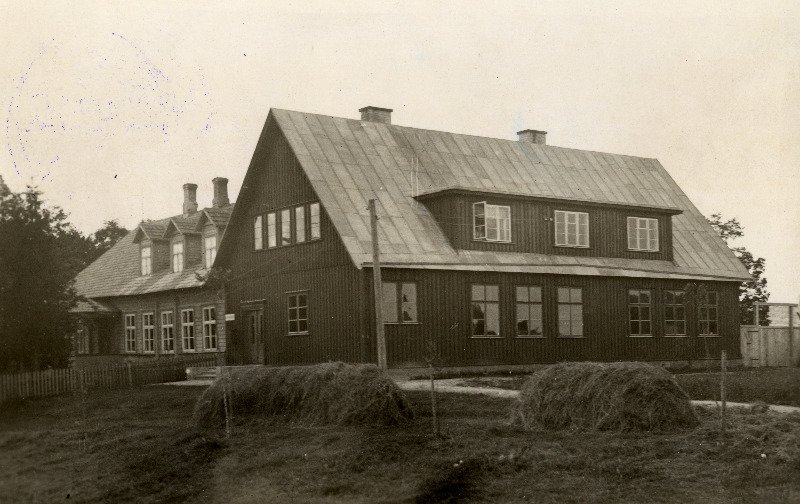
A primary school in Pähkla,1937 (EFA.554.0.182559)
However, he apparently reneged on his word – more reports of public inebriation came to the attention of officials [16]. This was joined by accusations that Toom had threatened tavern-goers with a revolver and was involved in punch-ups [17]. A school inspection in Pähkla on 2 January 1923 revealed that pupils struggled with simple arithmetic [18]. Presumably to avoid further problems, Toom resigned from his position in April 1923 [19]. He then tried to find work as a postman in Orissaare, but the postmaster, aware of Toom’s lifestyle, refused to hire him [20].
It is remarkable, then, that Metropolitan Aleksander (Paulus) of Tallinn (1872-1953) ordained Toom as an Orthodox priest on 7 October 1923 [21]. Toom was appointed to both the church of the Birth of Christ in Uue-Virtsu and that of St Nicholas in Mäemõisa [22]. The Ööriku parish council, some of whose members were aware of his previous behaviour, expressed ‘the loudest protest’ against Toom’s elevation to the cloth [23], while another clergyman declared, ‘I am deeply shocked by A. Toom’s ordination as a priest.’ In 1924, Toom tried to become a priest in Laimjala, but other clergymen in the Saaremaa deanery protested [24]. Toom promised the congregation: ‘I am a serious man of faith, I will not ask you for any salary, unlike other priests who are slaves to Mammon’ [25].
Toom remained at the Mäemõisa parish until 1925, when he created yet another scandal. As the magazine Esmaspäev reported, Toom officiated at three weddings on the same day, with disastrous results. After the nuptials:
There was joking and drinking. Finally, a fight broke out between the priest and the farmers. The holy man could not withstand the farmers’ show of strength. He was thrown to the floor and so unluckily that his leg broke. When the wedding was over, the priest limped home. There he took out his anger on his wife, throwing the contents of his porridge pot at her. Having done this, the priest felt that life was endlessly meaningless. He decided to leave. He wrote a letter in which he forgave the congregation for all their sins, past and present, and asked for the cross he wore around his neck during church services to be taken with him to the next world. Then he woke up the district chief, gave him the letter, and said that he would hang himself that night. ... They began to search for the priest, until he was finally found sleeping sweetly on hay in the attic [26].
After finding the priest, the district chief sent Toom’s ‘last’ letter to the church administration in Tallinn, which warned him of dismissal should unacceptable behaviour continue [27].
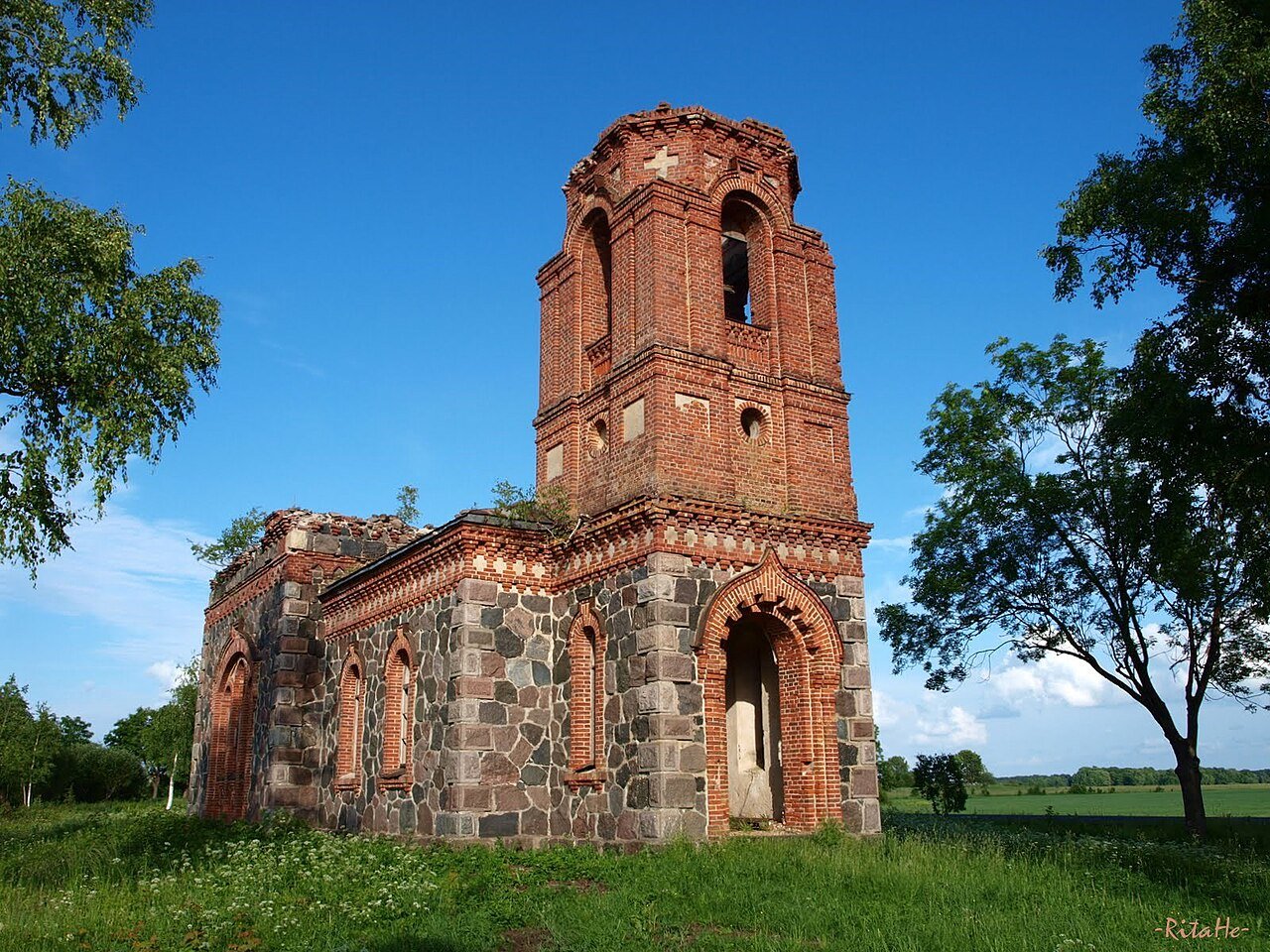
Ruins of the Mäemõisa church of St Nicholas
Meanwhile, the parish in Uue-Virtsu seemed completely satisfied with Toom, although it was Toom himself who wrote the reports [28]. However, issues emerged after 1926. As a consequence of the secularisation of Estonian schooling in 1919, the Uue-Virtsu parish had lost its school building, which it wanted back. However, sending Toom to Tallinn with money to hire a new lawyer to handle the case only led to him allegedly purloining the money. The members of the Uue-Virtsu congregation complained to the dean of Läänemaa Jakob Mutt (1879-1948):
Our spiritual leader is lying to our faces […] our hopes that the priest Toom would do something for us have been dashed, because this is not the first time he has embarrassed us. Our patience with him is finally running out. We hope that in the future you will send us a more decent (more sober) pastor [29].
Over the next few years, Toom’s misdeeds continued to mount: applying for a position in another parish without permission provoked the Synod’s ire in December 1929 [30], while in 1930 the Uue-Virtsu congregation petitioned Metropolitan Aleksander to dismiss Toom because he ‘does not consider himself the shepherd of the congregation, but rather their enemy’ [31]. Apparently, Toom even demanded that the removal of the dead from the graveyard. Unsurprisingly, a parish assembly voted to dismiss Toom for his ‘immoral lifestyle’ [32]. The priest protested, sparking accusations and counter-accusations, choice among which were that Toom had threatened to stab an attendee at a christening following an altercation [33] and that he had once been so drunk that he had fallen asleep in the street, almost causing a car accident and remaining prostrate even when a dog relieved itself on his head. The Synod at this point resolved to suspend Toom from his duties until an investigation could be held [34]. To rub salt into the wound, Toom’s part-time employers at the Eesti insurance company decided to terminate his contract, presumably because of the scandal [35].

Interior of the Uue-Virtsu church of the Birth of Christ, interwar period (EAA.5466.1.20.115)
For all the trouble he was in, Toom created yet more: newspapers reported that the clergyman was involved in a law suit revolving around accusations of drink-driving in Tallinn [36]. Apparently, Toom’s defence lawyer asked to interview people involved in the case to determine whether the priest was ‘full of sweet vodka or the Holy Spirit’ at the time. Meanwhile, as the Synod’s investigation rumbled on, Toom claimed that ‘the majority of the congregation is satisfied with me, except for the initiators of the conflict, who are communists and acquired such views from the Russian Reds’ [37]. He also alleged the parish owed him 200,000 cents in unpaid wages [38].
Indeed, Toom continued to have supporters in the parish, winning votes to continue his service [39]. The dean of Läänemaa was puzzled:
I must say that the behaviour of the U.-Virtsu congregation towards priest Toom is very peculiar: first, the congregation drives him away and then takes him back by a majority vote. One moment the congregation cries out, “Crucify him!” and the next, “Hosanna!”’ [40].
Finally, in October 1930, the Synod decided to defrock Toom [41]: his case was probably not assisted by a letter wherein he threatened to reveal compromising secrets about other Orthodox clergy and to convert to Evangelical Christianity if he was dismissed [42]. The next few months saw Toom interfering with the work of his successor and indulging in more drunken debauchery. In January 1931, an audit of the parish’s finances revealed that at least 1,300 crowns of membership dues paid between 1924 and 1930 were missing [43].
Despite his defrocking, Toom then decided to lead the Risti congregation, which did not have a priest in 1931: the parishioners immediately accepted his offer of free services. In addition, he started to perform the duties of a registrar, which forced the Synod to ask the Ministry of Justice and the Interior to close the registry office until the matter was resolved [44]. Toom tried to declare the Risti parish an independent religious association, but was unsuccessful [45]: despite this, he began selling of parts of the parish’s property for his own financial gain [46]. It took until the end of 1931 for the Synod to prize Toom out of Risti [47].
Toom’s career as a teacher and clergyman appeared to be over: by the end of the 1930s, he was working in the peat mining industry in Kiviõli [48]. During the Nazi occupation, he was briefly arrested [49]. He apparently briefly found work at a school in 1944-45 [50] before becoming a mill manager, a job he held until 1948 [51]. And then, staggeringly so considering his record, Toom was reinstated to the clergy on 20 June 1948 [52], serving in the Seli-Tõstamaa church of St Basil the Great [53] and the Kastna church of St Arsenius [54] until 1951 [55]. In 1954, Toom moved to the Latvian diocese and served congregations in Alūksne and Vana-Laitse [56]. He died on 11 February 1961.
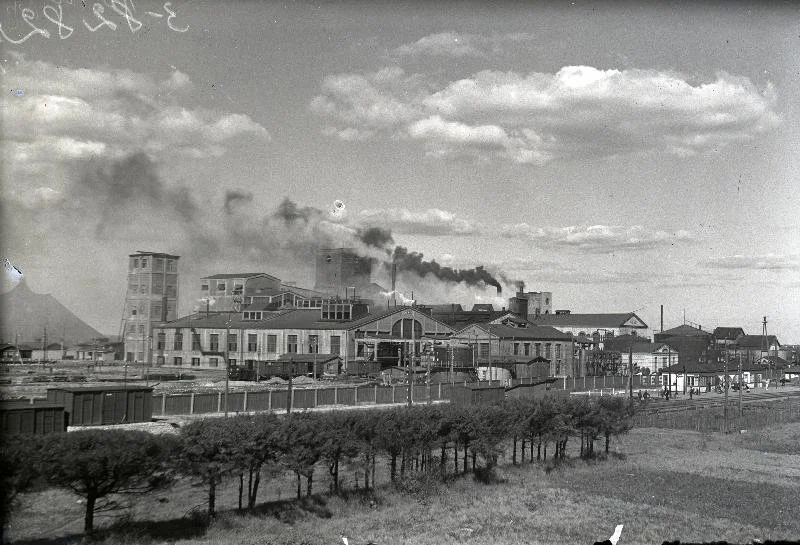
Kiviõli oil refinery, interwar period (EFA.98.3.8282)
As can be seen from the above, Aleksander Toom left a contradictory impression on those who came into contact with him – this is evidenced by sources that praise him on the one hand and sharply criticize him on the other. Toom provoked sharply opposing opinions both as a schoolteacher and later as a priest. It is difficult to give a definitive answer in retrospect as to why the opinions of people who came into contact with Toom differed so greatly.
[Editor’s note: Toom’s case illustrates two problems confronted by interwar Orthodoxy in the Baltics. First, parish democracy, established between 1917 and 1920 both to realise the ambitions of the late imperial Orthodox reform movement and to reflect the reality that congregations were now solely responsible for funding their churches and the clergy rather than the state, created fertile grounds for protracted disputes between pastors and flocks. This often devolved into fruitless rounds of allegations and counter-allegations that the church authorities could do little to resolve. Given the tense domestic and geopolitical context, it was commonplace for both sides to accuse each other of communist leanings. These disputes frequently revolved around wages, which parishes might withhold either due to indigence or dissatisfaction. As we see in Toom’s case, the poverty of his position meant that he had to take a side gig with the Eesti insurance firm.
Second, the Estonian Apostolic Orthodox Church had two major staffing problems. On the one hand, the Church had more than enough clergy to staff the handful of Russian-speaking parishes thanks to the wave of émigré priests fleeing the Soviet Union. But, on the other, it had too few Estonian-speaking priests and sacristans to man the comparatively large number of Estonian parishes at its disposal. Note the fact that both in 1923 and 1948, Toom was appointed to manage two parishes simultaneously, a sign of the Church’s manpower deficit: equally, Toom was able to exploit the fact that in 1931 the congregation of Risti was having trouble hiring a priest. So, the EAOC’s staffing shortage meant that Estonian individuals with poor track records were able to enter the clergy without much difficulty: this seems to have even applied to a man like Toom, allegedly a violent rapist and drunkard. His ordination does not reflect well on either Metropolitan Aleksander (Paulus) or the EAOC’s Synod.]
Notes
[1] ERA.1108.15.362, service list of A. Toom; TLA.884.10.1747.1–2; EAA.5410.1.249.538-539.
[2] TLA.884.10.1747.4.
[3] ERA.1108.15.362, service list of A. Toom; TLA.884.10.1747.1–2; EAA.5410.1.249.538–539; https://www.eoc.ee/vaimulik/toom-aleksander/?v=a57b8491d1d8 (here, the schools and time periods are at slight variance to other sources).
[4] ERA.5140.1.2, report from the Uue-Virtsu Orthodox church for 1924, 15.01.1925.
[5] EAA.1655.3.572.75.
[6] Ibid., 74.
[7] Ibid., 85.
[8] Ibid., 84.
[9] ERA.1108.15.362, service list of A. Toom; TLA.884.10.1747.1–2; EAA.5410.1.249.538–539; https://www.eoc.ee/vaimulik/toom-aleksander/?v=a57b8491d1d8
[10] ERA.1108.15.362, letter from the parents of the Pähkla school to the Saaremaa school board, 1921.
[11 Ibid., police interview protocols, September 1921.
[12] Ibid.
[13] Ibid., letter from the district police chief to the chief of police of Saremaa, 19.10.1921.
[14] Ibid., letter from the Saaremaa school board to A. Toom, 12.11.1921; ERA.2013.1.723.112ob.
[15] ERA.1108.15.362, A. Toom’s letter to the Saaremaa school board, 25.11.1921.
[16] Ibid., Letter from the education department of Saaremaa to the chief of police of Saaremaa county, 22.11.1922.
[17] Ibid., report by the chief of police of Saaremaa to the Saaremaa county government, 21.12.1922; EAA.1655.3.572.40.
[18] ERA.1108.15.362, audit report of the Saaremaa education department, 2.01.1923.
[19] ERA.2013.1.723.151; ERA.1108.15.362, Toom’s service list; TLA.884.10.1747.2; EAA.5410.1.249.538–539.
[20] EAA.1655.3.572.87ob.
[21] https://www.eoc.ee/vaimulik/toom-aleksander/?v=a57b8491d1d8
[22] Ibid.; Õigeusu kirikutes (kogudustes) teeninud vaimulike nimekiri (Tallinn, 1975), 160-169.
[23] EAA.1655.3.572.86.
[24] Ibid., 76, 80.
[25] Ibid., 83.
[26] ‘Preester ennast poomas’, Esmaspäev (6 April 1925), 3.
[27] ERA.5140.1.2, letter from the Tallinn Diocesan Council to Dean Jakob Mutt, May 1925.
[28] ERA.5140.2.3, protocols of the parish assembly of the Uue-Virtsu Orthodox church, 8.08.1926.
[29] ERA.5140.1.4, Letter from members of the congregation of Uue-Virtsu to Dean Jakob Mutt, 17.03.1927.
[30] EAA.1655.3.621, letter from the Synod to A. Toom, December 1929.
[31] Ibid., letter from the congregation of Uue-Virtsu to Metropolitan Aleksander, March 1930.
[32] ERA.5140.1.7, parish assembly of the Uue-Virtsu church, 13.04.1930.
[33] According to another witness, Toom initially asked for a revolver, and when this was refused, he asked for a knife: EAA.1655.3.572.42; ERA.5140.1.7, letter from M. Alpius to Metropolitan Aleksander, 11.05.1930.
[34] ERA.5140.1.7, Letter from the Synod to Dean Jakob Mutt, 19.05.1930.
[35] Kindlustusseltsi, ‘“Eesti” kuulutused’, Lääne Elu (16 April and 26 April 1930).
[36] Maaleht (3 May 1930), 8; Lääne Elu, 14 May 1930, 3.
[37] EAA.1655.3.621, Letter from A. Toom to Metropolitan Aleksander, 18.08.1930.
[38] ERA.5140.1.7, copy of A. Toom’s petition to the Synod, 4.09.1930; EAA.1655.3.621, A. Toom’s petition to the Synod, 4.09.1930.
[39] Ibid., protocols of the parish assembly of the Uue-Virtsu Orthodox church, 28.09.1930.
[40] EAA.1655.3.621, letter from Dean Jakob Mutt to Metropolitan Aleksander, October 1930.
[41] ERA.5140.1.7, excerpt from protocols of a session of the Synod, 30.10.1930.
[42] EAA.1655.3.621, A. Toom’s petition to the Synod, October 1930.
[43] ERA.5140.1.8, audit, 17.01.1931.
[44] ‘Isehakanud preester teeb siseministeeriumile peavalu’, Waba Maa (11 October 1931), 7.
[45] EAA.1655.3.572.72, 96; ‘Ei saanud kogudust registreerida’, Waba Maa (7 November 1931), 3; ‘Ristile ei registreeritud iseseisvat kogudust’, Lääne Elu (11 November 1931), 2.
[46] EAA.1655.3.572.34.
[47] Ibid., 39.
[48] https://www.eoc.ee/vaimulik/toom-aleksander/?v=a57b8491d1d8
[49] ERA.R-294.1.167.226; https://www.eoc.ee/vaimulik/toom-aleksander/?v=a57b8491d1d8
[50] TLA, 884.10.1747.5; TLA, 884.10.1747.6.
[51] https://www.eoc.ee/vaimulik/toom-aleksander/?v=a57b8491d1d8
[52] https://www.eoc.ee/vaimulik/toom-aleksander/?v=a57b8491d1d8
[53] https://www.eoc.ee/vaimulik/toom-aleksander/?v=a57b8491d1d8; EAA.5437.1.64.118.
[54] EAA.5437.1.64.28.
[55] Ibid., 118, 28.
[56] Ibid., 6.
Author
Margus Lääne.
Edited and abridged
James M. White
Source
Originally published as Margus Lääne, ‘Õpetaja – maa sool või pipar?’, Tuna, no. 2 (2023), 70-84.
Date published
23 February 2026