Electing a bishop, 1935-1937
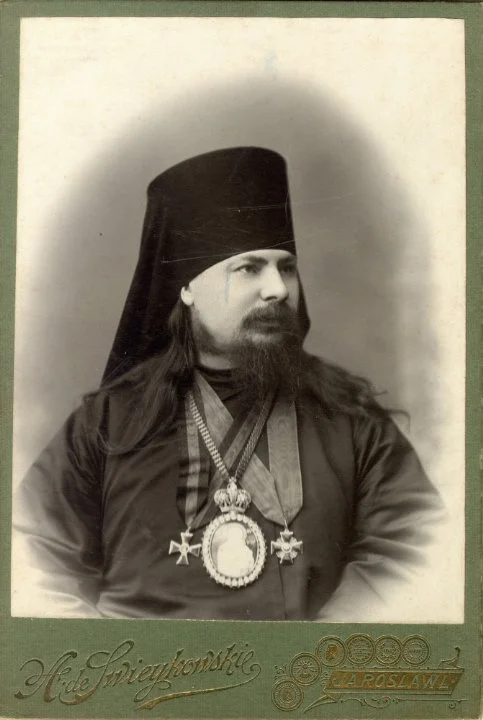
Archbishop Evsevii (Grozdov) (1866-1929)
The sudden death of Archbishop Evsevii (Grozdov) on 12 August 1929 incited a crisis amidst the Russian flock of the Estonian Apostolic Orthodox Church (EAOC). The young diocese of Narva, founded only five years earlier precisely to care for the EAOC’s Russian souls [1], was left without a leader, and there would be no opportunity to elect a new one until the next Church Council, scheduled for the summer of 1932. Consequently, the eparchy was temporarily entrusted to the bishop of Pechory region, Ioann (Bulin) (1893-1941). He was the logical choice: not only was he prominent in Russian political and cultural circles in Estonia, but he had also been elected to lead a putative Russian diocese in Estonia in 1920, denied consecration as a bishop by Patriarch Tikhon (Bellavin) of Moscow due to his youth (only 27 at the time).
However, Ioann quickly proved a liability: in 1930, he fought a venomous struggle with the EAOC’s Synod over the autonomy of his monastery in the town of Pechory [2], a fight that sucked in the question of Narva diocese’s replacement bishop. When the Church Council met in 1932 to discuss the matter, Russian delegates unanimously backed the candidacy of Archpriest Anatolii Ostroumov (1861-1937), the aged but combative rector of the cathedral of the Dormition in Tartu. However, Estonian delegates, firmly in the majority, rejected Ostroumov on the grounds that he spoke little Estonian. They instead opted to give the job to Ioann (Bulin). This was a ploy: if elected bishop of Narva, Ioann would have to take up residence in that city, thereby leaving the Pechory monastery in the Synod’s hands. Infuriated that their choice had been overridden, the Russian representatives abandoned the Church Council. Meanwhile, Ioann campaigned against the Council’s decision before the press, the courts, and the patriarch of Constantinople. These actions gave the EAOC grounds to dismiss him as bishop of Pechory.
Thus, by 1935 Narva diocese had been without a permanent bishop for six years. The sources translated below show the process whereby a new candidate, Archpriest Pavel Dmitrovskii (1872-1946) of the Narva cathedral of the Transfiguration, was vetted. The election of bishops was still a novelty in the region: in the days of the Russian Empire, Orthodox hierarchs had been appointed by the emperor after recommendations from the Church. Indeed, as letter no. 1 implies, the Narva Diocesan Council (NDC) seems to have been minded to simply appoint a replacement for Archbishop Evsevii after the controversies of 1932; however, both Dmitrovskii and Metropolitan Aleksander (Paulus) of Estonia (1872-1953) insisted on wider consultation.
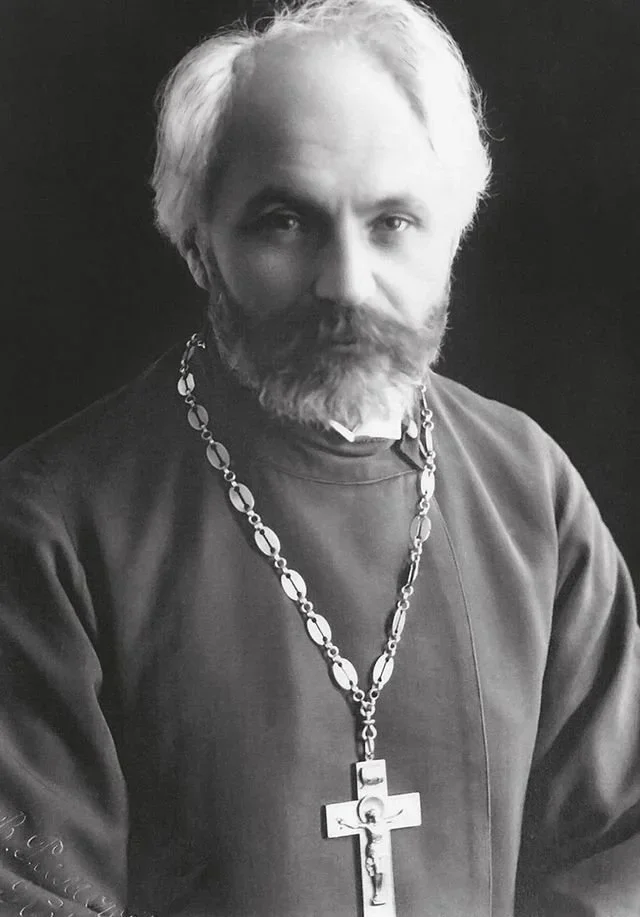
Archpriest Pavel Dmitrovskii
In Narva diocese, episcopal elections were held by the Narva Diocesan Assembly, a semi-regular legislative meeting of clerical and lay representatives sent by all the parishes in the eparchy: the assembly’s choice would then, at least in theory, be confirmed by the Estonian Church Council, another irregular assembly constituted by Estonian and Russian parish delegates that issued binding rulings for the entire EAOC. It should be noted that none of the episcopal elections held in the EAOC between 1920 and 1940 were contested by more than one candidate.
During the vetting between 1935 and 1937, most parishes simply confirmed the NDC’s choice of Dmitrovskii. However, as the sources show, several congregations and clergymen raised concerns. The priests of Narva, for instance, were worried about Dmitrovskii’s lack of Estonian and that electing a member of the Transfiguration cathedral’s staff might give even more preponderance to this temple in the city’s ecclesiastical ecosystem. They also hoped the election might give them the opportunity to realise their long-held dream of forcing the NDC to abandon Tallinn in favour of its namesake city. Elsewhere, parishes complained about the lack of other candidates, mentioning specifically Archpriest Anatolii Ostroumov and Father Sergii Grozdov (1895-1977) of the Skam’ia church, the only son of Archbishop Evsevii. In one case, a parish avoided debating the issue entirely on the grounds that they did not know anything about Dmitrovskii, prompting a caustic reply from the NDC. In another, a priest not only responded negatively to Dmitrovskii, but also proposed completely abolishing Narva diocese. Interestingly enough, neither the parishes nor the church authorities mention Dmitrovskii’s arrest in 1925 on the grounds of ‘anti-Estonian activities’.
Dmitrovskii was eventually elected as the bishop of Narva in October 1937 in a consecration ceremony attended by bishops and clergy from across the Baltic region. As Pavel (Dmitrovskii), he led the diocese during the Second World War, during which he broke with Metropolitan Aleksander over whether to become part of the Moscow Patriarchate. Following Narva diocese’s abolition in 1945, Pavel was appointed as archbishop of Tallinn and Estonia, a position he held until his death in 1946.
No. 1: Letter from Archpriest Pavel Dmitrovskii to Archpriest Vasilii Chernozerskii [3], 29 November 1935.
Dear and venerable father!
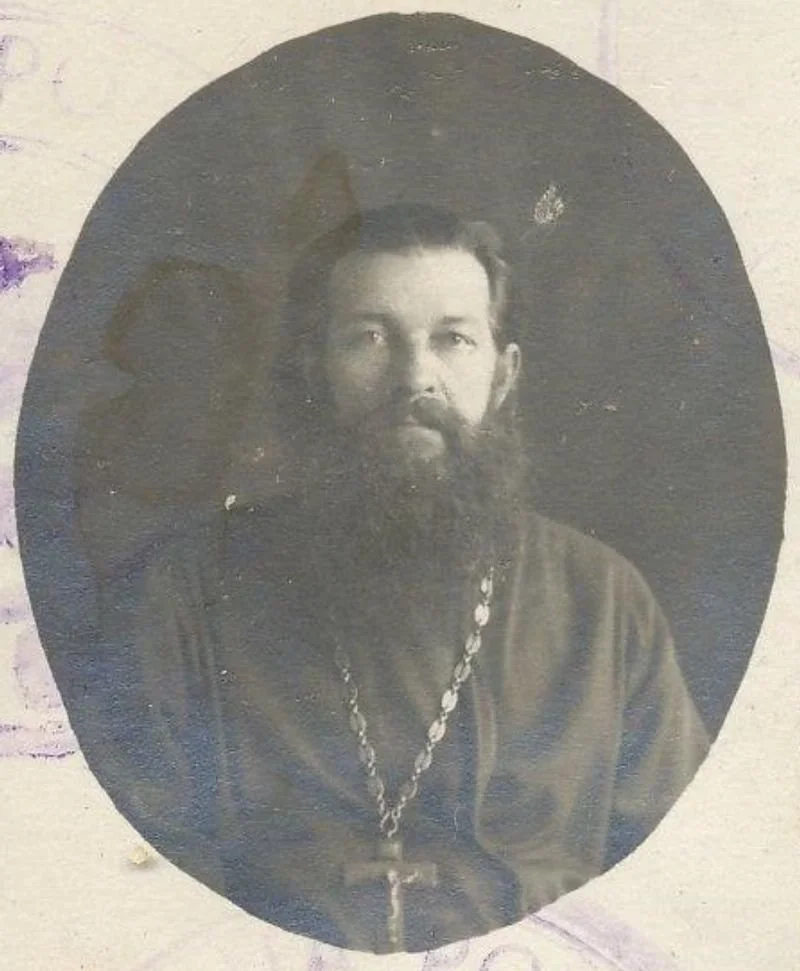
Archpriest Vasilii Chernozerskii
I have thoroughly thought about everything you and others said at the session of the diocesan council on 12 November and have come to the following conclusion. I absolutely do not feel ready or capable for episcopal service. However, considering the hopelessness of the [diocese’s] position, I think each of us is morally obliged to take on and bear the service laid upon him by our small diocese. In my opinion, it is absolutely necessary for the diocese to express its will at such a difficult moment. You think that it will be useless to turn to the parishes [for their opinion], with which, alas, I have to agree. But in this case, it is necessary to find another means to discover the diocese’s will. Ask for the metropolitan’s blessing and convene a diocesan assembly. This will be accompanied with great difficulties, but the moment the diocese is suffering through is even more difficult. I dare to think that this is the only exit from the current situation. Perhaps it would be possible to convene the diocesan assembly to coincide with the ‘assembly of representatives of the Church’ [4]. Let the diocese itself choose the path of its future life. Indeed, it is impossible to put someone at the head of the diocese who is uninterested in the opinion of the diocese itself.
With sincere respect,
Archpriest P. Dmitrovskii
[EAA.1655.2.2895.1]
No. 2: Report from the Narva Diocesan Council to Metropolitan Aleksander (Paulus), 26 May 1936.
Since the day of Archbishop Evsevii’s death in 1929, Narva diocese has remained widowed. In 1932, Archpriest Anatolii Ostroumov was elected to the vacant position of ruling bishop, and it seemed as though care for the diocese would be realised, but the Church Council did not confirm this election and thereby placed before Narva diocese a task difficult to resolve – finding another candidate.
In its efforts to find among the Russian clergy a worthy person to occupy the episcopal cathedra, the diocesan council has come to the thought of proposing Archpriest Pavel Grigor’evich Dmitrovskii for this post.
Father Dmitrovskii, as is clear from his service list, was born in 1873 and comes from a clerical family, he is the son of a deacon. He studied at the Tavrida ecclesiastical seminary and graduated in 1894 with the rank of student: on 6 May 1896, he was ordained a priest; two years later, he was removed from his position as a parish priest at his own request in order to matriculate into the St Petersburg ecclesiastical academy [5], where he audited courses. In 1911, he was again assigned a position as parish priest in the Ivanovo parish of Iamburg district [6]; in 1915, he was transferred to Kronstadt as a naval chaplain of the Baltic fleet. After the fleet’s demobilisation, he was appointed in 1918 as priest of the church of the Dormition at the Belaia Struga railway station on the St Petersburg-Warsaw line, whence in July 1919 he arrived in Narva. From this time, he has served as the second priest of the cathedral of the Transfiguration.
He is a widower and has no family.
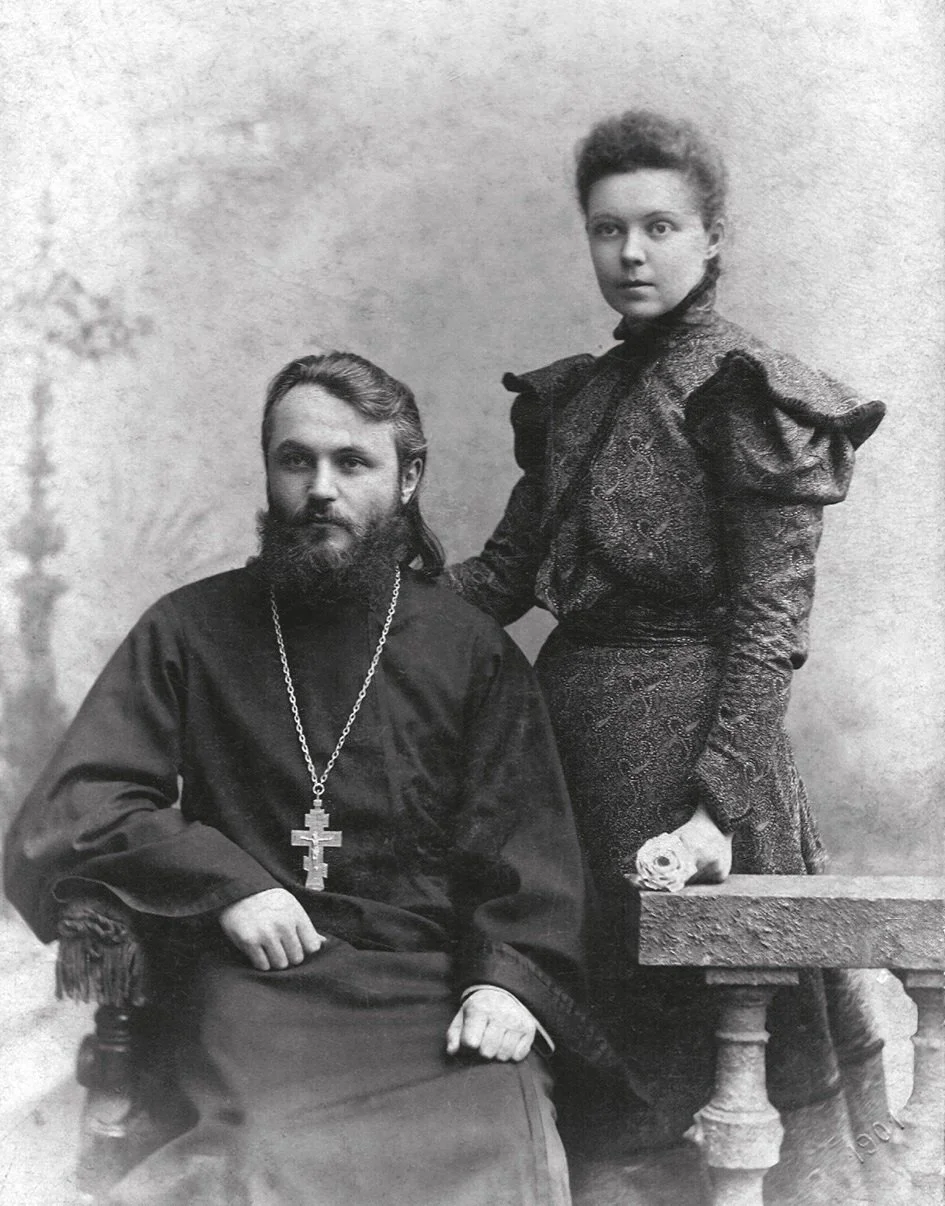
Father Pavel Dmitrovskii with his wife Anastasiia shortly before her death in 1901
During Father Dmitrovskii’s seventeen years within Estonia’s borders, he has become well known in social and church circles. In his life, Father Dmitrovskii is an example of a good pastor, humble in his habits, entirely giving himself to serving the Church, and with great love participating in religious-educational work among the younger generation.
Taking into account all the above, as well as Father Dmitrovskii’s great life experience and his church and social standing, the diocesan council recognises that it is for the good to most respectfully petition Your Grace about canonical approval for Archpriest Dmitrovskii’s candidacy for the cathedra of Narva and Izborsk [7].
Signed:
Chair: Archpriest V. Chernozerskii
Members: Archpriest V. Kamenev [8]
Father G. Alekseev [9]
A. Ia. Khrenovskii [10]
Archpriest I. Bogoiavlenskii [11]
26 May 1936
[EAA.1655.2.2895.2-2ob]
No. 3: Letter from Metropolitan Aleksander (Paulus) to the Narva Diocesan Council, 26 June 1936.
To the Narva Diocesan Council
In response to your report from 25 May this year relating to the candidacy of Archpriest Pavel Grigor’evich Dmitrovskii for the cathedra of Narva and Izborsk, I communicate that I approve this candidacy, since at the current time we do not have anyone more suitable for this post.
I ask the diocesan council to clarify the position of the parishes of Narva diocese to Father P. Dmitrovskii’s candidacy.
Metropolitan Aleksander
[EAA.1655.2.2895.3]
No. 4: Report from the pastoral assembly [12] of the Narva clergy, 9 July 1936.
Reviewing the circular of the Narva Diocesan Council from 27 June 1936 (no. 280), the pastoral assembly of the Narva clergy on 8 July 1936 unanimously carried the following resolutions:
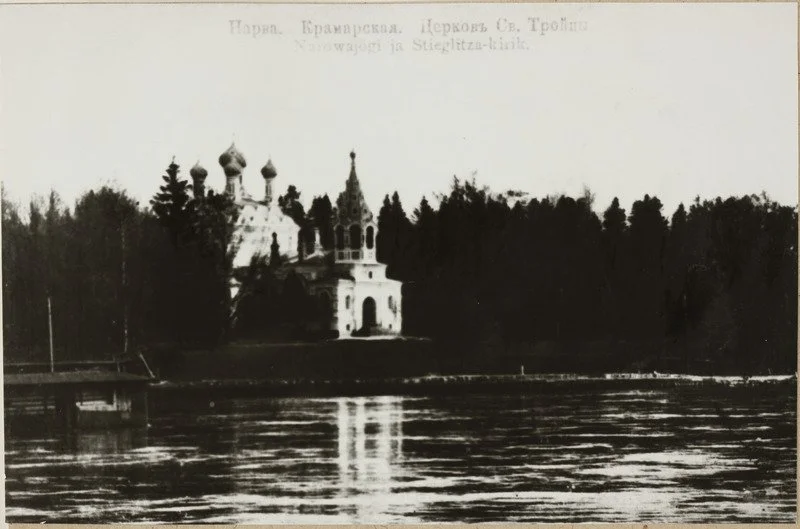
Narva church of the Trinity (EAA.5466.1.21.37)
1) The participants of the Narva clergy’s pastoral assembly have nothing against Archpriest P. Dmitrovskii’s candidacy, put forward by the Narva Diocesan Council, for the cathedra of Narva diocese’s ruling bishop. However, taking into account that Archpriest A. Ostroumov’s candidacy was not confirmed by the Church Council of 1932 due to his ignorance of the official language [Estonian], the participants consider it necessary to bring this circumstance to the diocesan council’s serious attention in order to avoid a repetition of this relevant grievous fact.
2) In the case that a Narva bishop is elected and confirmed, the taxes levied on individual parishes in the budget of 1932 must not be increased.
[...]
4) In the case that a bishop for the Narva cathedra is elected and confirmed, the assembly considers it necessary that the diocesan council’s location should be moved to Narva in view of the administrative benefits and the reduction of costs relating to diocesan management.
[...]
Narva, 9 August 1936
Substitute chair of the presidium of pastoral assemblies of the Narva clergy: Archpriest Konstantin Kolchin of the church of the Sign [13].
[EAA.1655.2.2895.10]
No. 5: Circular of the Narva Diocesan Council, 14 July 1936.
To the clergy of Narva diocese
His Grace Metropolitan Aleksander has deigned to order it declared to the clergy that henceforth pastoral assemblies can only be held with the permission of His Grace according to programmes confirmed by His Grace: unauthorised assemblies are forbidden.
This order is communicated for guidance and fulfilment.
Signed: Chair, Archpriest V. Chernozerskii
Sealed: Secretary, Khrenovskii
[EAA.1655.2.2895.11]
No. 6: Protocols of the parish council of the Skam’ia church of St Elijah held on 12 July 1936.
[…]
2. Heard: the candidacy of Archpriest Pavel Dmitrovskii as the bishop of Narva. Ruled: the parish council agrees to the candidacy of Archpriest Pavel Dmitrovskii, as approved by His Grace the Metropolitan, for the cathedra of the bishop of Narva, but also considers it necessary to declare the parish’s incapacity at the present time [to pay] the annual diocesan tax of thirty crowns. It asks for the lowering of such to 15 crowns annually. Being burdened with debt, the parish is finding it difficult to find the necessary funds to maintain the clergy.
[…]
[EAA.1655.2.2895.20]
No. 7: Protocols of the parish council of the Vasknarva church of St Elijah held on 12 July 1936.
[…]
The current session of the parish council was convened especially so as to become acquainted with the Narva Diocesan Council’s circular from 27 June this year (no. 280) and for urgent discussion ‘of the desirability of raising Archpriest Pavel Grigor’evich Dmitrovskii to the Narva episcopal cathedra’.
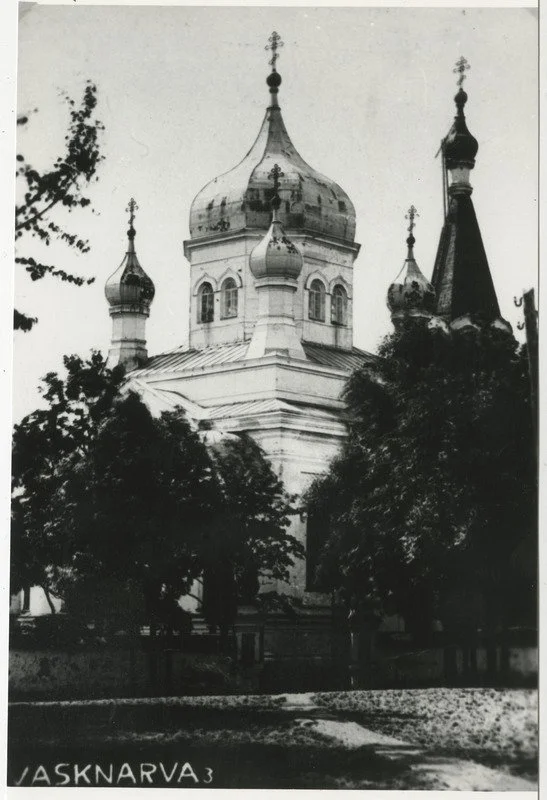
Vasknarva church of St Elijah, interwar period (EAA.5466.1.20.122)
Due to the haymaking season, only eight people, together with the clergy, were able to be present at the session. On hearing the circular, the session agreed to Archpriest Pavel Dmitrovskii’s candidacy, but almost unanimously expressed the need for the announcement of more candidates for the episcopal cathedra. Such a question is considered highly serious: while the previous election, with the presence of only one candidate for some reason, was not fortunate, other candidates from both the towns and the villages are desirable in this second election. For instance, the parish council mourns the absence of the candidacy of the deserving Archpriest Anatolii Ostroumov, who was already elected unanimously by the diocesan assembly in 1932: we ask that he not be skipped this time. We consider Father Sergii Grozdov, the heir of the late Archbishop Evsevii, as a third candidate, as he has an academic education and other virtues: he would also be desirable as [Archbishop Evsevii’s] direct successor.
For increasing the number of candidates to at least three, a closed ballot gave the result of six votes in favour and two against.
[…]
[EAA.1655.2.2895.22-22ob]
No. 8: Protocols of the parish council of the Pechki church of St George, 14 July 1936.
[…]
On hearing the letter from the Narva Diocesan Council from 27 June this year (no. 280), the parish council unanimously concluded that a ruling bishop for Narva diocese is necessary. In terms of Father Pavel Dmitrovskii’s candidacy, we abstained from discussing it, as this person is unknown to the parish council.
[…]
[EAA.1655.2.2895.24-24ob]
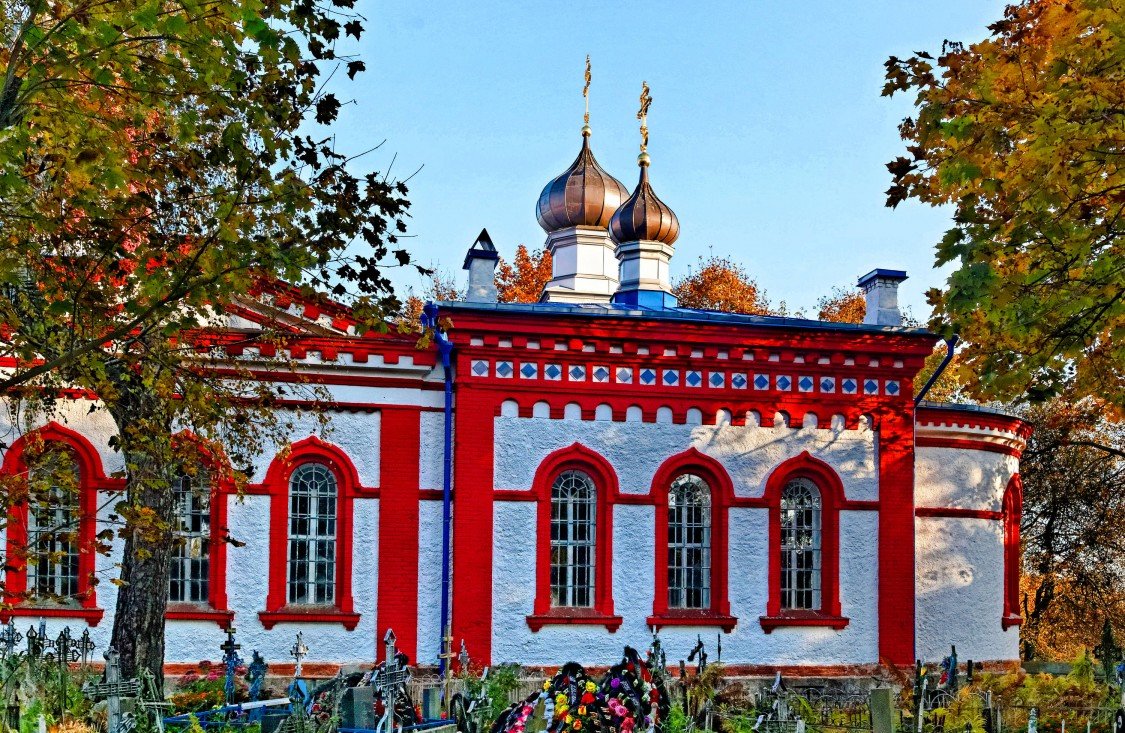
Pechki church of St George, present day
No. 9: Letter from the Narva Diocesan Council to Father Ioann Vinogradov [14] of the Pechki parish, 20 July 1936.
In its session on 16 July, the diocesan council reviewed the protocols of parish council sessions in the parishes and paid attention to the protocols you attached to your report from 14 July (no. 27). The parish council unanimously (and therefore with your participation) abstained from expressing its attitude towards Father Dmitrovskii’s candidacy for the post of diocesan bishop, ‘since he is unknown to the [parish] council’. Before all else, this is not an answer to the question raised. Was really so little biographical information communicated in circular no. 280? Was everything said in the circular about the candidate’s personal qualities really insufficient? For what reason does the parish council distrust its diocesan administration and why does the approval of His Grace the Metropolitan mean nothing? Do members of the parish council really not understand that the candidate cannot go around the parishes to present himself! It is necessary to know that Father Dmitrovskii has not yet achieved episcopal rank but has only given conditional agreement to forward his candidacy: taking into account the position Narva diocese finds itself in, he does not consider it right to refuse.
It behoves you, the spiritual leader of the parish, to explain all that was said [here] to the parish council and bring the newly appointed members to reason. The very chief thing is to get them to understand that a circular requires a positive answer, i.e., either agreement or disagreement, and not just a formal response. In view of this, the diocesan council cannot fail to find your actions in the current matter to be at the very least tactless and cannot leave you ignorant of this fact.
Chair
Secretary
[EAA.1655.2.2895.31-32]
No. 10: Report from the parish council of the Narva church of St Vladimir to the Narva Diocesan Council, 13 July 1936.
Discussing the diocesan council’s circular proposition from 27 June (no. 280), the parish council of the Narva church of St Vladimir carried the following resolution: it considers Archpriest P. G. Dmitrovskii’s candidacy, forwarded by the diocesan council and canonically approved by His Grace, desirable. Archpriest P. Dmitrovskii has great spiritual and life experience, and therefore it must be proposed that the widowed diocese will find in him a reliable helmsman. However, while greeting Archpriest P. Dmitrovskii’s candidacy, the parish council finds that the future diocesan bishop must not remain a clergyman of the Narva Transfiguration cathedral. Following the example of the late Archbishop Evsevii, the ruling bishop of Narva diocese must be freed from external binding circumstances and influences. In case of his election, Archpriest P. Dmitrovskii should intend to leave the normal services and rites that he [now] performs, as these would lower the high rank of bishop to the level of a rank-and-file priest, take from him the time necessary to conduct the business of the diocese and visits to parishes, introduce into the parish life of Narva a novelty unprecedented in the Orthodox Church, and, undoubtedly, give birth in the parishes undesirable and harmful gossip about other bishops of our Church when compared with the bishop of Narva and Izborsk. Besides these general considerations, the presence of the future bishop of Narva diocese in the clergy and parish council of the Transfiguration cathedral will scarcely ended the unequal relations between the cathedral and the church of St Vladimir, which, due to the material position of these churches, have existed over the course of many years, to the great sorrow of the fraternity of St Vladimir[15].
Besides the aforementioned requests, the parish council of St Vladimir’s church, paying attention to the Narva clergy’s resolution on this question, asks the diocesan council to pay serious attention before convening a diocesan assembly to the candidate’s ignorance of the Estonian language in order to avoid a repetition of the sad failure to confirm Archpriest A. Ostroumovskii for the same reason. So necessary in our times for the rank-and-file pastor, knowledge of the official language is especially necessary for a bishop in his wide field of activities.
[…]
[EAA.1655.2.2895.30-30ob]
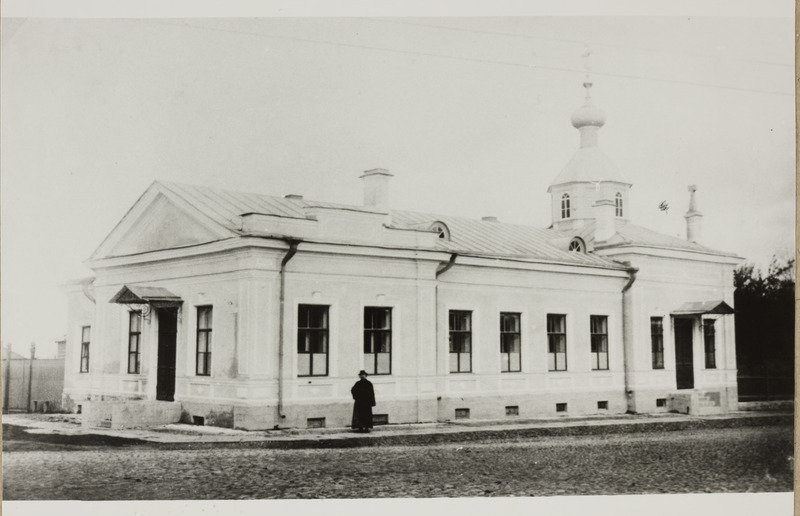
Narva church of St Vladimir (figure in the front is likely Father Pavel Kalinkin), interwar period (EAA.5466.1.21.21)
No. 11: Letter from Father Aleksandr Ornatskii [16] of the Nina parish to the Narva Diocesan Council, 23 July 1936.
I am deprived of the possibility of fulfilling the NDC’s instructions (no. 280), since members of both the parish council and the board (including the church elder) have not been present from 15 to 24 July. The judgements of Nina stonemasons about an archpriest unknown to them would be an irregular phenomenon, and the matter can go ahead without rulings from Nina. I am acquainted with Father Pavel Dmitrovskii, I have had meetings with him at pastoral assemblies in Narva. I can only be surprised that he himself did not reject his candidacy to become a bishop in Estonia, [since he] does not know the official language, in which everything must always be said, written, and answered. [I am also surprised] because he, Father Pavel, like many among the clergy, smokes tobacco: if he has given up smoking, then God knows what could happen, but if a bishop smokes, even secretly, then all the clique grouped around the Yid newspaper V[esti] D[nia], headed by V. Volgin [17], […] will begin to mock. In my opinion, it is of utmost necessity to ask His Grace the Metropolitan to manage Narva diocese with the help of Archbishop Nikolai [18], and the question of the bishop should be delayed for an undefined amount of time, or at least until the death of Archpriest Ostroumov […]. If the Narva Diocesan Council, an institution with little authority either among the civil authorities or in the parishes, will not be in Tallinn but in Narva, it would be better to completely abolish the diocese and establish a Russian section under the Synod: no less money will go to Narva from the poor Russian parishes than now, when it is fruitless to expect from there benefits, advice, or support. For my own reasons, I probably won’t go to the diocesan assembly, if there is one: it is also unlikely that lay representatives from Nina will come. 23 July 1936.
Father A. Ornatskii of the Nina church.
[EAA.1655.2.2895.49-50]
No. 12: Protocols of the board and parish council of the Jaama church of St Nicholas, 12 July 1936.
1. Heard: Instruction from the Narva Diocesan Council from 27 June 1936 (no. 280) to discuss the desirability of raising Archpriest Pavel G. Dmitrovskii to the Narva episcopal cathedral. Ruled: to express the unanimous agreement of the Jaama parish to forwarding Archpriest Pavel Grigor’evich Dmitrovskii’s candidacy for the post of bishop of Narva diocese. If possible, the maintenance of the Narva bishop will be taken on by the state.
[…]
[EAA.1655.2.2895.55]
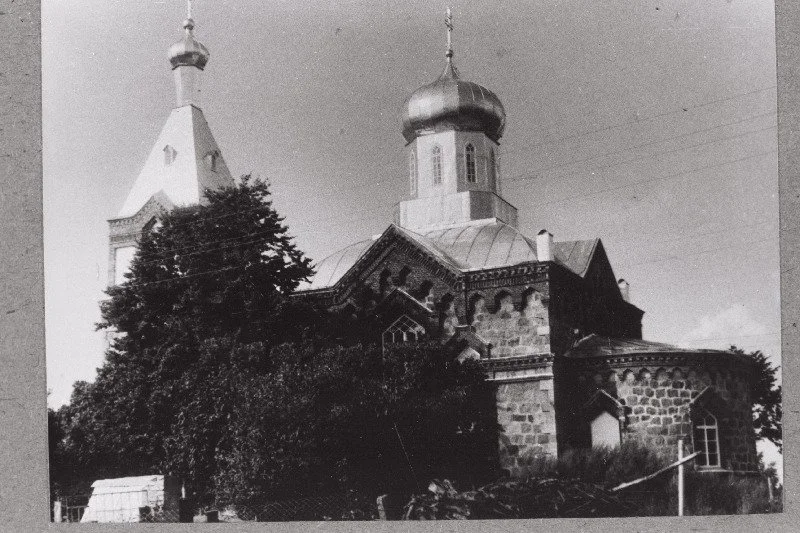
Jaama church of St Nicholas, 1990
No. 13: Newspaper article: ‘They are again causing trouble in the Church’, 8 September 1936.
From time to time, attempts are made among us to violate the normal course of church life, to bring strife and quarrel into the Church. Whether with ill intent or simply due to misunderstandings, people who consider themselves pious and religious take steps clearly directed at bringing trouble into the Church. This subversive work is often conspiratorial and, of course, in other conditions could have wholly deplorable results for the Orthodox Church of Estonia.
Our readers will know that some months ago the Narva Diocesan Council forwarded the candidacy of Archpriest P. Dmitrovskii, respected by all, for the vacant post of the ruling bishop of Narva diocese. This candidacy received canonical approval from the head of the Orthodox Church in Estonia, Metropolitan Aleksander: the metropolitan expressed the desire that the diocesan council identify the attitudes of all Russian parishes towards this candidacy.
To fulfil the desire of the head of the Church, the Narva Diocesan Council turned with a corresponding proposal to all Russian parishes. All the parishes unanimously approved Archpriest P. Dmitrovskii’s candidacy: this, or so it seemed, fully revealed the attitude of Russians in the question of filling the vacant post of ruling bishop of Narva diocese.
However, to our shame, among Russians there were also those who considered it permissible to forward petitions (even though unofficially) about another candidate. These people have tried in all possible ways to belittle Archpriest P. Dmitrovskii’s virtues and have not been afraid to declare that it is scarcely possible that Archpriest Dmitrovskii will receive all the Russian votes in the election. These irresponsible declarations are being made by Russians, despite the fact that all Russian parishes have unanimously expressed themselves in favour of the candidate [chosen by] the Narva Diocesan Council.
Not only this. It has recently been revealed that the second candidate promoted by these people has categorically refused to forward his candidacy.
I would like to believe that these attempts, harmful for the Church, by private individuals to intrigue against an unpleasing candidate, one who wields vast and fully deserved esteem from all Russians who know him, will end with the complete disgrace of the intriguers. It is a shame that even in delicate church questions we cannot be unanimous and that among us there are people who do everything possible to bring trouble into the Church.
How do matters now stand with Archpriest Dmitrovskii’s candidacy? At the end of this year or the beginning of the next, a minor council [19] of the Orthodox Church will be held, and at this council they will also discuss the leadership of Narva diocese. If the minor council expresses itself in favour of Dmitrovskii’s candidacy, then, without a doubt, this question can be considered resolved in a positive sense, since Metropolitan Aleksander, as is well known, is not against it.
Unfortunately, there is no basis to hope that the intriguers against Archpriest Dmitrovskii will cease their ‘work’. More likely, they will want to use the few months that remain before the minor council to achieve aims harmful to the Church.
The Orthodox Church in Estonia has already survived much adversity. We believe that it will overcome this unpleasantness and emerge from it still stronger.
[Pravoslavnyi, ‘Snova khotiat vnesti v tserkov’ smutu’, Vesti dnia, no. 203 (3226) (8 September 1936), 1].
No. 14: Protocols of the Narva Diocesan Assembly, 8-9 June 1937.
Protocol no. 2 of the diocesan assembly of Narva on 9 June 1937, held in the hall of the Tallinn Russian gymnasium, Pikk tänav 6.
The assembly opened at 18:45 in the presence of His Grace Archbishop Nikolai of Pechory and delegates from the Russian parishes of Narva diocese.
The chair, Archpriest I. Bogoiavlenskii, gave an explanation of the first point of the agenda: ‘the confirmation of Archpriest P. Dmitrovskii’s candidacy as bishop of Narva diocese’. The question of the care for Narva diocese has already been resolved in principle by all the diocese’s parishes thanks to the written responses to the diocesan council about Father P. Dmitrovskii’s candidacy. The chair proposed that all the diocese should once more express its voice regarding the candidate for bishop. Individual orators expressed themselves in favour of an unanimous vote for Archpriest Dmitrovskii as the individual who has received the canonical approval of the metropolitan and the Synod.
All present sang ‘Come, Now is The Time to Worship’, after which an open ballot was held. The representatives of 26 parishes unanimously voted ‘for’ Archpriest P. Dmitrovskii’s election to the cathedra of the bishop of Narva. Nine ‘Axios’ [20] were sung to the elected candidate. All delegates read and signed the act of election. After a brief word of greeting from Archpriest Bogoiavlenskii and a response from Archpriest Dmitrovskii, a ten-minute break was declared, during which all the assembly’s participants were photographed together with the bishops Aleksander, Herman [21], and Nikolai.
[…]
[EAA.1655.2.2895.90]
No. 15: Newspaper article: ‘The Widowed Cathedra of Narva Diocese Has Finally Received Its Helmsman’, 6 October 1937.
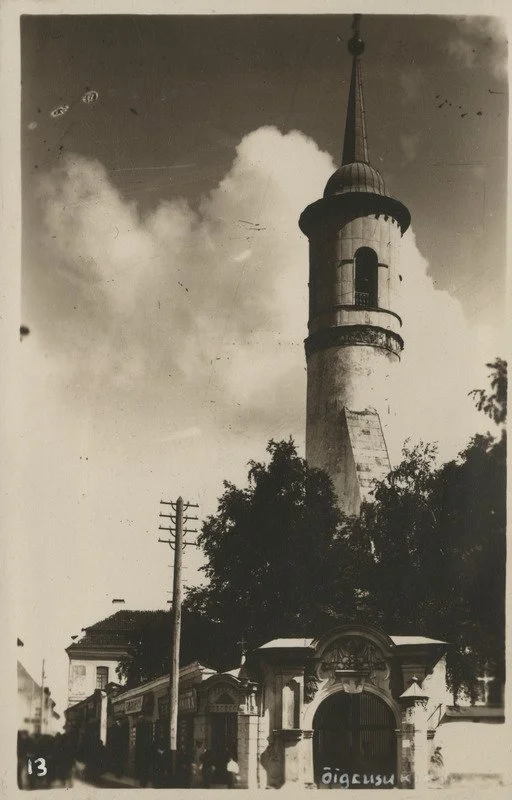
Narva cathedral of the Transfiguration, 1929 (EAA.4643.1.577.12)
The consecration of Archpriest P. Dmitrovskii as a bishop was a most exclusive and singular celebration in the 700 years of Narva’s existence.
On Saturday [2 October 1937], at 4 o’clock in the afternoon in the small church of the Transfiguration cathedral, the tonsuring [22] of Archpriest Pavel Dmitrovskii was performed by four bishops: they and the newly tonsured solemnly signed the corresponding certificate. In honour of the newly tonsured Pavel, the first ‘Many Years’ [23] was declared.
On the evening of the same day, a solemn evensong was held by all four bishops and Father Pavel, along with twenty priests and many deacons. Metropolitan Augustīns [24] of Latvia gave a sermon on the sacraments of the Orthodox Church and the sacrament of ordination, through which the newly tonsured Pavel receives the grace of the Holy Spirit. Many worshippers were present at the liturgy.
On Sunday [3 October] – the day of the main celebrations – the cathedral of the Transfiguration began to fill with worshippers from 7 in the morning, and it was full by 9. Around 3,000 filled the cathedral: despite such a number of people, complete decorum and order were observed at all times. 27 priests from all parts of Estonia served. Among the worshippers were representatives of the city authorities, two Narva Lutheran pastors in their vestments, and representatives of all local society (Russian, Estonian, German, etc.). Many came from other towns and from the countryside. The mood inside the cathedral was unusually festive.
At 9 o’clock, Metropolitan Aleksander, Metropolitan Augustīns, Archbishop Herman, and Archbishop Nikolai arrived at the cathedral: they were met at the church doors by all the clergy. Just before the liturgy, after the reading of the Hours, the archbishops went to the elevated section in the middle of the cathedral, along with all the clergy: here, the first part of Archpriest P. Dmitrovskii’s consecration as a bishop was performed. With Metropolitan Aleksander’s blessing, Archpriest V. Chernozerskii and Archdeacon A. Sakharov [25] led Father Pavel here from the altar and took him to the eagle’s tale [26].
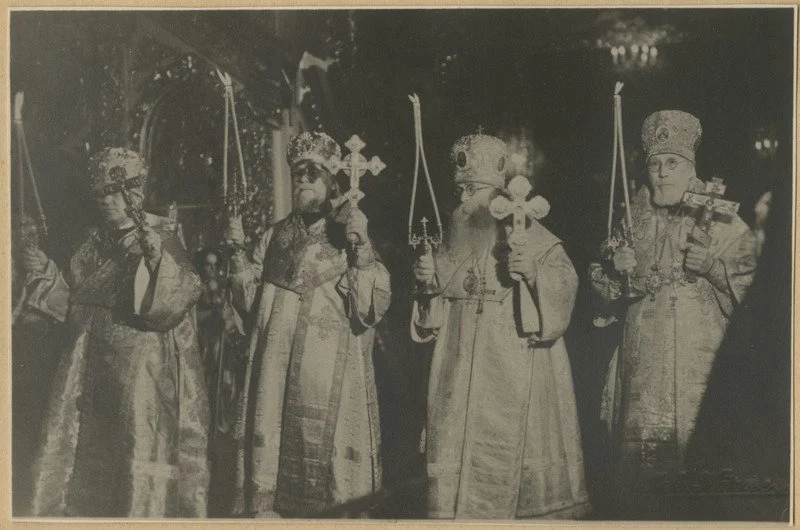
From left to right: Archbishop Herman (Aav), Metropolitan Aleksander (Paulus), Metropolitan Augustīns (Pētersons), and Archbishop Nikolai (Leisman) perform together at Bishop Pavel (Dmitrovskii’s) consecration, 3 October 1937 (EAA.5355.1.337.169)
‘For the sake of what have you come here and what would you humbly ask of us?’, asked Metropolitan Aleksandr of Father Pavel.
‘Consecration, episcopal grace’, responded Father Pavel.
To the next question, ‘what do you believe?’, Father Pavel intoned the Nicene Creed, after which he was led to the centre of the eagle, where he read out a confession of the Orthodox faith. Finally, moving to the eagle’s head, Father Pavel pronounced an oath to precisely observe the rules of the Holy Apostles, Councils, and Fathers, to obey the higher church and civil authorities, to keep the peace, and to fulfil his duties conscientiously and in fear of God. After the episcopal blessing and [the declaration of] ‘Many Years’ to the state, the government, the bishops, and the newly tonsured Bishop Pavel, he again went to the altar.
The sacrament of ordination itself was performed during the liturgy, before the reading of the Apostles. During the singing of the Trisagion [27], the bishops led Father Pavel to the altar. At its foot, Pavel bowed on his knees and the bishops held an open copy of the Gospels above his head. Then Metropolitan Aleksander read out a prayer and all the bishops placed their right hand on Pavel’s head. Episcopal vestments were placed on the newly consecrated Bishop Pavel, and the clergy and choir repeatedly proclaimed, ‘Axios!’ In the final liturgy, Bishop Pavel participated together with the other bishops.
The liturgy, performed by five bishops and twelve priests, was unusually solemn and left a majestic impression. A joint choir of all the Narva churches sang wonderfully under the guidance of five choirmasters, each taking turns. The priest G. Alekseev from Tallinn read a sermon on the theme ‘And God saw every thing that he had made, and, behold, it was very good.’ The liturgy was performed in Old Church Slavonic, although some of the exclamations and prayers were pronounced in Estonian, Latvian, and Finnish.
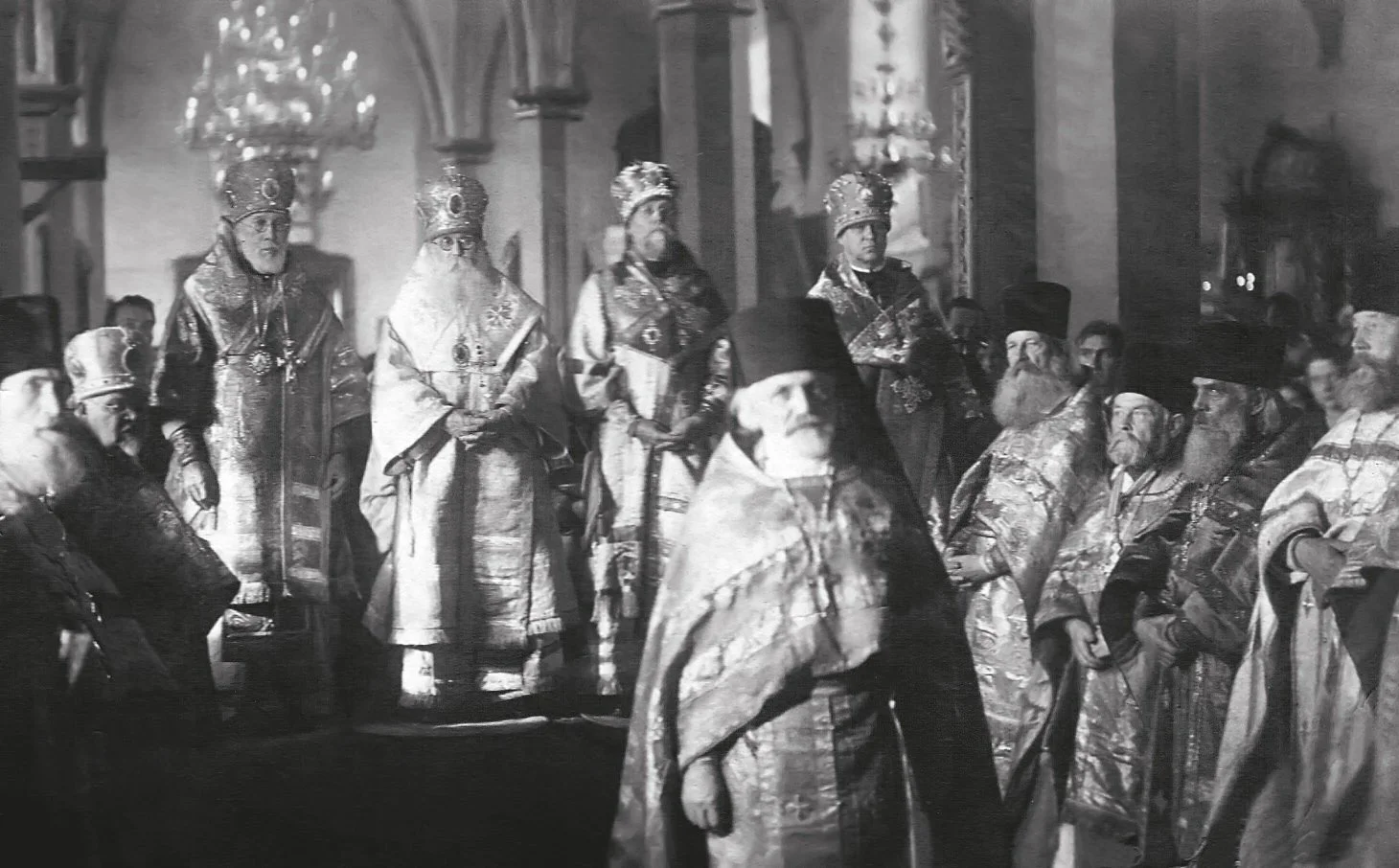
Consecration of Bishop Pavel (Dmitrovskii), 3 October 1937
On the liturgy’s conclusion, all the bishops again came to the elevation in the centre of the cathedral and here conducted the ceremonial bestowal of the episcopal crosier on Bishop Pavel. Turning to Bishop Pavel, Metropolitan Aleksander gave a wonderful speech in Estonian and Russian where he sincerely greeted Pavel on a new path of service: he remarked that the inscrutable ways of God had led Father Pavel from south to north, to our country, and had crowned him with the grace of the Holy Spirit.
‘We here are of different nationalities, but we are all brothers in Christ. Serve first of all your people, but also all the citizens of our dear motherland, be a man of prayer and an exemplary archpastor’, said Metropolitan Aleksander. He quoted the words of the great Russian poet: ‘Become a prophet…and with the Word burn men’s hearts!’ [28].
Then Metropolitan Augustīns from the Latvian Orthodox Church greeted Bishop Pavel in Latvian. Archpriest A. Andresson [sic] [29] read out a sermon in Russian. ‘In our times, the episcopal mitre is heavy, but the Divine Spirit, which heals all the weak, will help you’, said Metropolitan Augustīns. Archbishop Herman from the Finnish Orthodox Church very warmly greeted the newly consecrated bishop in Finnish and Russian.
With great attention, the worshippers listened to Bishop Pavel’s response. Warmly thanking Metropolitan Aleksander and the other hierarchs, Bishop Pavel, in a wonderful and sincere speech, said, ‘I have taken on a small but difficult diocese. It is difficult because it is Russian. The Russian people are an especially seeking people, and within them there is now a hard struggle between two principles, faith and unfaith. To draw all to the faith of Christ, traditional service is, apparently, not sufficient, some kind of new path is necessary…’
Then Archpriest N. Päts [30] greeted Bishop Pavel in the name of the Synod and Archpriest V. Chernozerskii in the name of the Narva Diocesan Council and others.
After more than an hour, Bishop Pavel blessed the people.
At 3 o’clock in the afternoon in the ‘Harmony’ hall, a festal meal was held, at which were present all five bishops, the clergy, parish and social figures, etc. During the meal, many greetings to Bishop Pavel were pronounced – from the city council, the Russian Student Christian Movement, social organisations, and others. An address from the parish of the Transfiguration cathedral was given.
At 6:30 in the evening, a religious concert was held in the cathedral. All five bishops were present. The cathedral was again full. A joint choir of all the Narva churches sung a range of songs beautifully. The choirmasters I. Chelpanov, I. Arkhangel’skii, I. Kuz’min, and L. Khezov [31] directed the choir. Archdeacon A. Sakharov also took part in the concert, joining the choir for two songs. At the end, Metropolitan Aleksander very warmly thanked the choir and its masters.
On leaving the cathedral at 9:50 in the evening, all the visiting bishops left Narva for Pechory. The newly consecrated Bishop Pavel also left with them. A vast number of people gathered at the train station to see the departing bishops off.
[‘Vdovstvuiushchaia kafedra Narvskoi eparkhii poluchila, nakonets, svoego kormchogo’, Russkii vestnik, no. 80, 6 October 1937, 2].

Archbishop Pavel (Dmitrovskii) of Tallinn and Estonia, c. 1946-47
Notes
[1] For more on Narva diocese, see https://www.balticorthodoxy.com/diocese.
[2] This was the so-called ‘monastery war’. See J. M. White, ‘Orthodox Monasticism in Interwar Estonia and Latvia’, in J. M. White and I. Paert, eds., Baltic Orthodoxy: People, Places, Practices (Tartu: University of Tartu Press, 2025), 238-246.
[3] Archpriest Vasilii Chernozerskii (1868-1940), rector of the Tallinn church of St Nicholas and chair of the Narva Diocesan Council for most of the period between 1924 and 1940.
[4] ‘Assembly of representatives of the Church’ – a translation of the Estonian term for a Church Council (kiriku täiskogu).
[5] St Petersburg ecclesiastical academy – the Russian Orthodox Church’s equivalent of a university, one of four in the Russian Empire.
[6] Iamburg district – Iamburg (today Kingissepp) district was in the westernmost part of St Petersburg province and neighboured on Estland province.
[7] Narva and Izborsk – the full title of the diocese. Izborsk is a city in Pechory region, the second largest after Pechory itself.
[8] Archpriest Vasilii Kamenev (1866-1939), rector of the Tallinn church of St Nicholas.
[9] Father Georgii Alekseev (1892-1966), second priest of the Aleksandro-Nevskii cathedral in Tallinn.
[10] Aleksei Khrenovskii (1860-1940), civil servant and secretary of the NDC from 1924 to 1940.
[11] Archpriest Ioann Bogoiavlenskii (1879-1949), rector of the Aleksandro-Nevskii cathedral/church of St Simeon in Tallinn. In 1947, he became Bishop Isidor (Bogoiavlenskii) of Tallinn and Estonia.
[12] Narva pastoral assembly - an intermittent meeting of Narva Orthodox clergy.
[13] Archpriest Konstantin Kolchin (1875-1941).
[14] Father Ioann Vinogradov (1875-1960).
[15] The fraternity of St Vladimir – this Orthodox brotherhood originated in 1888 when the St Petersburg brotherhood of the Holy Theotokos established a branch in Narva, which eventually came to run its own school and church. In 1917, the branch founded a new brotherhood, that of St Vladimir. Although the school was secularised following Estonian independence, the brotherhood continued to run the church of St Vladimir. The independent parish was closed in the late 1930s and adjoined to the cathedral of the Transfiguration.
[16] Father Aleksandr Ornatskii (1890-1944).
[17] Vesti dnia was a Russian-language daily newspaper in Estonia from 1926 to 1940, edited from 1928 by Evlaliia Grigor’eva (1888-1976). The ‘V. Volgin’ referenced may be Vasilii Nikiforov-Volgin (1900-1941), a noted journalist and novelist. Quite why the newspaper and Nikiforov-Volgin inspired the ire of the almost-legendarily cantankerous Ornatskii is unclear.
[18] Archbishop Nikolai (Leisman) (1862-1947), from 1933 the archbishop of Pechory.
[19] Minor council – a preparatory meeting that set the agenda for the Estonian Church Council proper (the ‘great’ council).
[20] Axios – Greek acclamation meaning ‘he is worthy’.
[21] Archbishop Herman (Aav) (1878-1961), archbishop of Finland from 1925.
[22] Tonsuring – the ceremony wherein an individual takes monastic vows. As all bishops in the Orthodox Church are monks, tonsure is a necessary part of becoming a bishop when an individual like Dmitrovskii is not already a monk.
[23] Many Years – part of the liturgy wherein long life is wished to the state, church leaders, and all Orthodox believers. Also known as the polychronion.
[24] Metropolitan Augustīns (Pētersons) (1873-1955), head of the Latvian Orthodox Church from 1936.
[25] Archdeacon Aleksandr Sakharov (1873-1956), deacon at the Tallinn church of St Nicholas.
[26] Eagle’s tale – during episcopal liturgies, such as the one described, a circular mat embossed with an image of an eagle flying over a city (in Greek, aëtos) is used. As we see in the article, during episcopal consecrations, the candidate slowly moves from the eagle’s tale to its head as various parts of the ceremony are completed.
[27] Trisagion – the ‘thrice holy’, a hymn used during Orthodox liturgies that translates as ‘Holy God, Holy Mighty, Holy Immortal, have mercy on us’.
[28] A quote from Aleksandr Pushkin’s 1826 poem The Prophet.
[29] Archpriest Georgii Andresson (1871-1946), priest of the Kreenholm church of the Ascension.
[30] Archpriest Nikolai Päts (1871-1940), chairman of the Estonian Synod, rector of the church of St Simeon/ cathedral of St Alexander in Tallinn. Brother of the Estonian statesman and dictator Konstantin Päts.
[31] Ivan Chelpanov (1880-????), a typesetter who in 1920 served as a sacristan for the church of Narva-Jõesuu before being removed for prolonged absences from the parish; Ivan Arkhangel’skii (1892-1968), an accountant at one of the Kreenholm factories and a sacristan of the Narva church of the Trinity. No biographical details are currently available for Kuz’min and Khezov.
Translator and editor
James M. White
Date added
13 February 2026